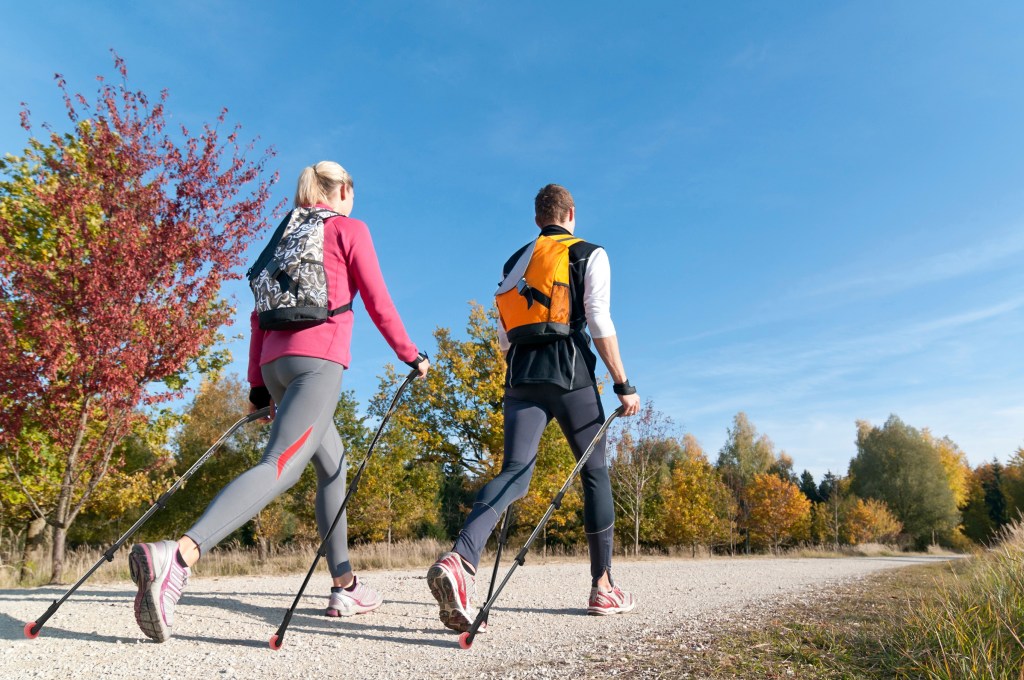
Walking on paved roads feels simple—but the wrong walking pole can make it uncomfortable.
Most poles are designed for trails, not pavement.
Here’s what actually works.
Why Regular Trekking Poles Don’t Work Well on Pavement
Traditional trekking poles are designed for uneven terrain.
On paved surfaces, they often:
- Require constant lifting
- Interrupt natural walking rhythm
- Create impact on wrists and shoulders
This makes long-distance walking less comfortable and less efficient.
What to Look for in Walking Poles for Pavement
If you walk on sidewalks, park paths, or urban environments, the ideal walking pole should offer:
1. Continuous motion support
A smooth walking rhythm is key. Poles that require lifting can break your stride.
2. Stable push capability
You should be able to apply force backward for propulsion.
3. Low impact on joints
Especially important for knees and shoulders.
Walking Pole vs Trekking Pole
The difference is not just in design—but in movement.
Traditional trekking poles:
Plant → Push → Lift → Swing
Modern walking support systems:
Push → Pull (continuous motion)
This simplified motion allows for a more natural walking experience on flat surfaces.
Best Walking Poles for Paved Road Walking (2026)
When evaluating walking poles for pavement, newer designs are beginning to focus on rolling support and continuous propulsion.
Some systems allow:
- Rolling forward motion without lifting
- Automatic braking when pushing
- Smoother rhythm for longer walks
These designs are particularly helpful for beginners and users looking for a more natural walking experience.
Learn more in our guide on how to choose walking poles.
Are Walking Poles Good for Knees?
Yes—when used correctly.
Walking poles can:
- Reduce load on knees
- Improve posture
- Distribute effort across upper and lower body
However, the benefit depends heavily on the type of pole and how it’s used.
Final Thoughts
If you mainly walk on paved roads, choosing the right type of walking pole matters more than most people realize.
The best option is not necessarily the most popular—but the one designed for how you actually walk.
FAQ
Are walking poles good for paved roads?
Yes, but only if they are designed for smooth surfaces. Traditional trekking poles are not optimized for pavement.
What is the difference between walking poles and trekking poles?
Walking poles for pavement focus on continuous motion, while trekking poles require lifting and planting.
Can walking poles reduce knee pain?
Yes. They help distribute load and reduce impact on joints when used correctly.
 Urban Walking Lab
Leave a comment