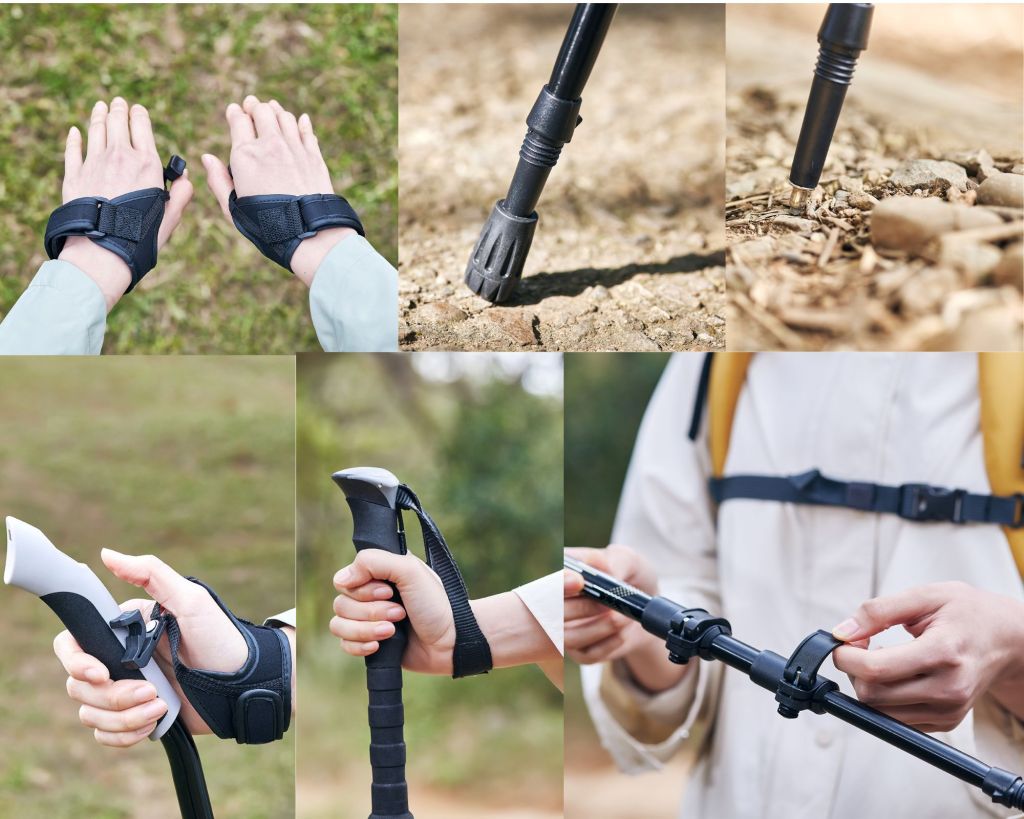
Choosing the right walking poles can completely change your walking experience.
But with so many options available, it’s not always clear what actually matters.
This guide will help you understand what to look for—so you can choose the right walking poles for your needs.
1. Where Will You Use Them?
The most important factor is where you plan to walk.
If you walk on:
- Sidewalks
- Park paths
- Urban environments
You’ll need poles designed for smooth surfaces.
If you walk on:
- Trails
- Mountains
- Uneven terrain
Then traditional trekking poles may be more suitable.
👉 Not all walking poles are designed for pavement.
Learn more in our guide on : Walking Pole vs Trekking Pole: What’s the Difference?
2. Movement Style Matters
Different poles support different walking mechanics.
Traditional trekking poles typically require:
Plant → Push → Lift → Swing
This works well on trails—but can interrupt rhythm on pavement.
Some walking poles are designed for a more continuous motion:
Push → Pull
This can feel smoother and more natural for everyday walking.
3. Stability vs Mobility
A good walking pole should balance:
- Stability (when pushing)
- Smooth movement (when moving forward)
On pavement, poles that can provide both are usually more comfortable over long distances.
4. Impact on Joints
One of the main reasons people use walking poles is to reduce joint stress.
The right pole can help:
- Reduce load on knees
- Improve posture
- Distribute effort across the body
However, this depends heavily on design and technique.
5. Ease of Use
If a walking pole feels complicated, you probably won’t use it consistently.
Look for designs that:
- Feel intuitive
- Require minimal adjustment
- Support a natural walking rhythm
Most users should feel comfortable within the first few sessions.
6. Weight and Adjustability
Consider:
- Lightweight materials (for long walks)
- Adjustable length (for proper fit)
- Locking system (quick and stable)
External lock systems are generally easier to adjust than twist locks.
7. Surface Compatibility
Not all tips or bases work well on pavement.
For paved roads, look for:
- Smooth contact with the ground
- Stable support during push
- Reduced vibration or noise
This can significantly affect comfort during longer walks.
How This Connects to Your Walking Experience
Choosing the right walking pole is not just about features—it’s about how it feels when you walk.
If you want to understand which designs actually perform better on pavement, you can read:
👉 Best Walking Poles for Paved Road Walking
Final Thoughts
The best walking poles are the ones that match your walking environment and natural movement.
Instead of focusing only on price or brand, focus on how the pole supports your walking rhythm.
That’s what makes the biggest difference.

 Urban Walking Lab
Leave a reply to Best Walking Poles for Paved Roads (2026 Guide) Cancel reply